


Since 1973, we have been designing and manufacturing custom helical gears for industrial applications requiring precision, reliability, and high performance. With 13 CNC gear hobbing machines, we produce helical gears with modules ranging from 0.2 to 3 mm, including components with diameters of just a few millimetres.
Helical gearing, characterised by teeth inclined relative to the axis of rotation, provides a gradual meshing action between mating gears. This results in lower noise and vibration levels while enabling higher torque transmission than spur gears of the same size.
We support our customers throughout every stage of the project, from design to series production, developing custom helical gears with any required helix angle and optimised for the specific application, operating conditions, and performance requirements.
Custom helical gears, no design constraints
Conventional hobbing machines limit the tilt of the tool head to 45°, a threshold that constrains the gear geometry that can be produced. Our machine fleet includes CNC hobbing machines with a tool head that tilts down to 0°, letting us cut any helical profile called out on the drawing, whether it follows European or US drafting conventions. Every gear is then verified on our Klingelnberg P26 gear analyzers, which measure helix error specifically, along with involute, pitch, and concentricity.
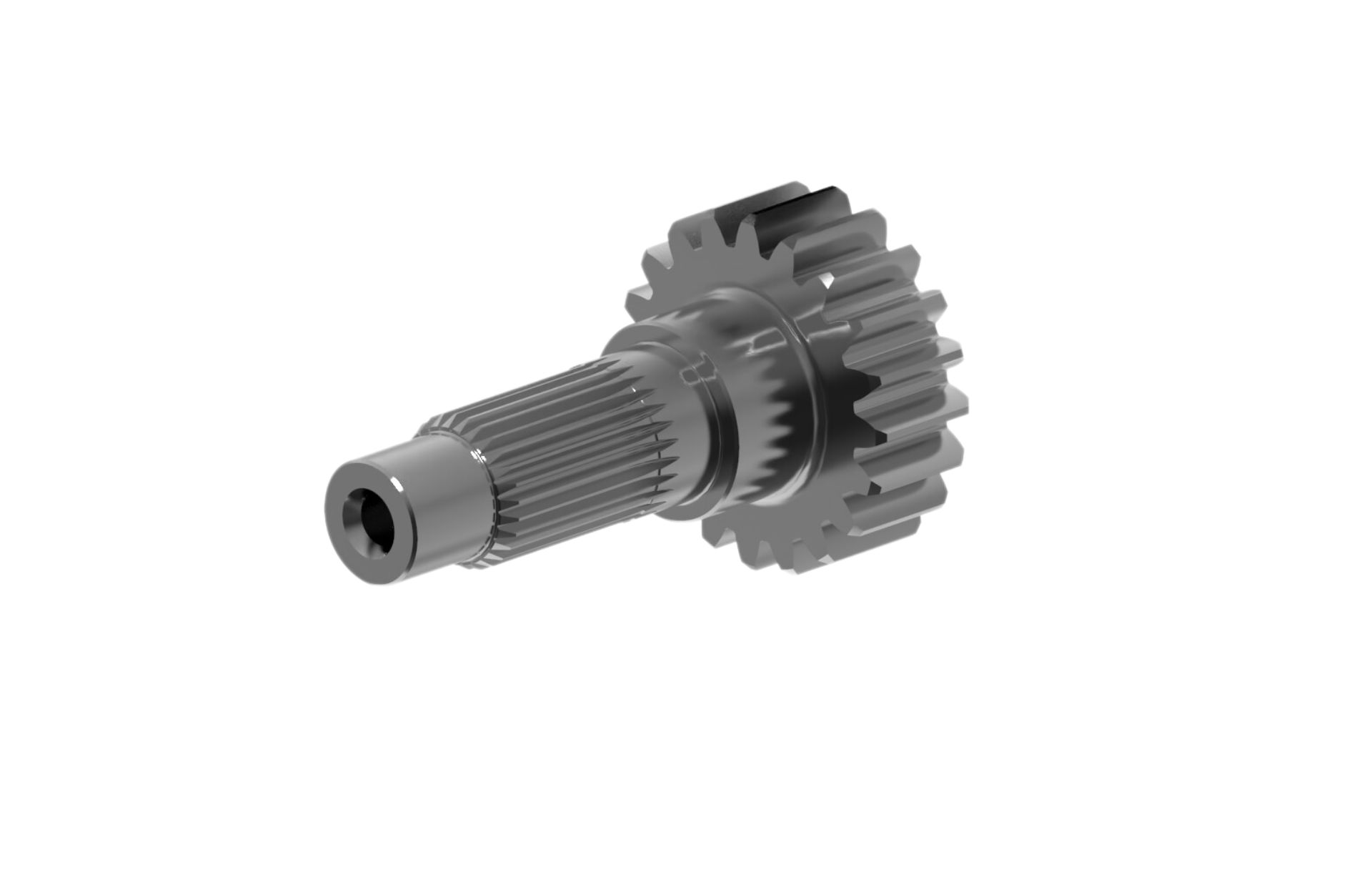
Axial thrust: engineering support from day one
Helical gearing generates axial thrust that bearings and shafts must absorb correctly. Our engineering team works with the customer from the design phase, using DTS software for gear tooth analysis and bending/contact strength verification in line with ISO/DIN standards, to size bearings and shafts to the performance required by the finished component — the kind of upfront support both our US and European customers rely on when specifying custom drive systems.
Skiving on case-hardened helical gears
Case hardening increases the surface hardness of the gear teeth but can slightly distort the geometry. We coordinate heat treatment with certified partners and, thanks to skiving technology on next-generation CNC machines, finish the teeth of case-hardened helical gears after treatment, restoring the geometric accuracy and load capacity the project calls for.
Crossed-axis and angled helical gears
Beyond conventional drives, we manufacture crossed-axis helical gears, capable of transmitting motion between non-parallel shafts, even at angles other than 90°. A useful solution when available space or mechanism layout calls for non-conventional configurations, common in compact drive systems for OEMs on both sides of the Atlantic.
Technical expertise at your service
Our technical office stands out for its expertise in designing a wide range of drive system solutions, including customized linear actuators and bespoke epicyclic gearboxes.
FAQ
Helical gears are toothed wheels with teeth cut along a line angled to the axis of rotation, rather than parallel to it as in spur gearing. This angle means tooth contact happens progressively, reducing noise and vibration and increasing load capacity at the same size.
In spur gearing the teeth are parallel to the axis of rotation: meshing is simpler to produce but noisier, because contact happens across the full tooth width at the same instant. In helical gearing, the angled tooth spreads the load more gradually, giving quieter operation and higher load capacity, at the cost of axial thrust that has to be managed at the design stage.
We can cut gears at any helix angle, thanks to hobbing machines in our fleet fitted with a tool head that tilts down to 0°, compared with the 45° maximum tilt offered by conventional machines.
We provide support at the design stage, helping size bearings and shafts correctly based on the technical requirements of the finished product.
We machine helical gears in alloy and non-alloy steels, stainless steel, brass, bronze, and aluminum, as well as engineering plastics such as POM, Delrin, and PEEK, depending on the load, weight, and corrosion resistance the application requires.
We manufacture helical gears with modules from 0.2 to 3, on outer diameters from a minimum of 4 mm up to 120 mm, with maximum lengths of 140 mm.
Yes, we can perform skiving on case-hardened helical gear teeth as well.
Yes, we can also manufacture angled-axis gears, including at angles other than 90°.
We need the complete technical drawing with module, helix angle, and tooth count, the required quantity, material, gear quality grade, and any heat or surface treatments.